Introduction to Spiti Valley
Spiti Valley in winter is nestled high in the rain-shadowed depths of the Trans-Himalayan region, Spiti Valley is not merely a destination; it is a state of mind. Often called “The Middle Land” for its position between Tibet and India, this remote, high-altitude desert transforms into an otherworldly, serene, and profoundly beautiful realm when winter descends. While summer sees a trickle of adventurous travelers, winter in Spiti is a different story—a story of silent, snow-blanketed monasteries, resilient communities, crystalline skies, and landscapes so stark and beautiful they seem carved from ice and light. This comprehensive guide is your key to unlocking the magic of Spiti Valley in winter, a season that reveals its most authentic and untamed soul.
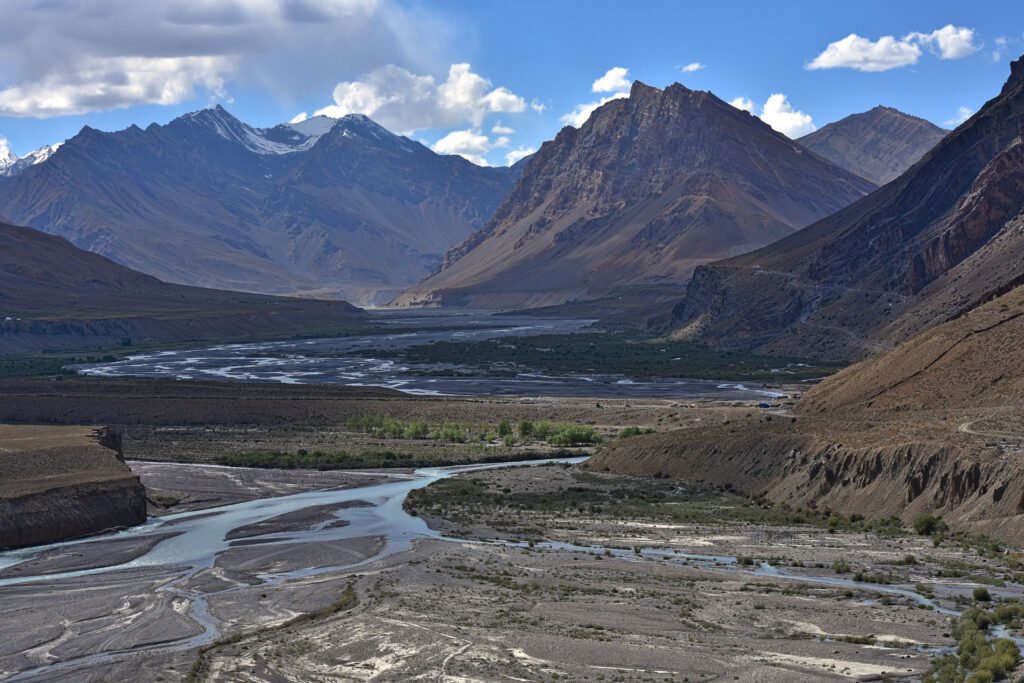
The Winter Metamorphosis: Weather and Landscape
To visit Spiti valley in winter is to witness one of nature’s most dramatic transformations. From October onwards, the temperature begins its steady plummet.
The Cold Embrace:
Temperatures routinely dip between -10°C and -25°C (14°F to -13°F), with nights in the higher villages like Kaza or Langza often falling below -30°C. The air is piercingly dry and thin, with altitudes ranging from 3,800 meters (12,500 ft) to over 4,500 meters (14,800 ft). Yet, this cold is not a damp, chilling one; it is a sharp, crisp cold under a sun that shines with surprising intensity for over 300 days a year.
A Landscape Transformed:
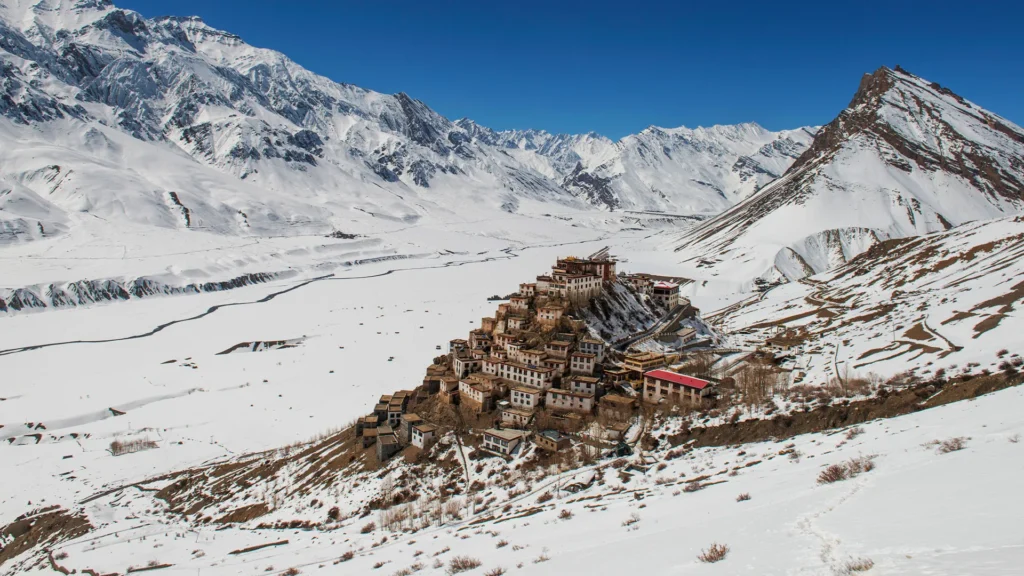
The summer’s rugged, brown, and grey mountains are swathed in deep, pristine snow. The Spiti River, a turquoise ribbon in warmer months, often freezes over in parts, creating mesmerizing patterns of ice. The famous Keylong–Kaza highway (NH 505) and the even more thrilling Kunzum Pass become journeys through a white wilderness, with snow walls flanking the roads. Villages like Kibber, Komic (one of the world’s highest motorable villages), and Hikkim appear as clusters of white-capped mud-brick houses, their smoke trails the only sign of life against the vast, white expanse. The light during the golden hours is magical, painting the snow in hues of pink, orange, and purple.
Embracing the Adventure: Winter Activities
Contrary to belief, Spiti valley in winter is not about hibernation; it’s about unique, raw adventures.
1. Snow Trekking and High-Altitude Hikes:
For the seasoned trekker, winter offers unparalleled solitude. Popular routes like the Dhankar Lake trek or the trail from Kaza to Langza become challenging snow treks, requiring proper gear, guides, and acclimatization. The rewards? Absolute silence, untouched snowfields, and panoramic views you’ll have entirely to yourself.
2. Skiing and Snowshoeing:
While there are no formal ski resorts, the slopes around Kaza, Kibber, and Losar offer incredible opportunities for backcountry skiing and snowboarding for experts. For beginners, snowshoeing is a fantastic way to explore the valley floor and nearby ridges safely.
3. Ice Climbing and Frozen Waterfalls:
The freezing temperatures create spectacular ice formations. Nearby Chandratal Lake is inaccessible, but smaller streams and cliffs freeze, offering opportunities for ice climbing for those with technical skills and local guides.
4. Stargazing and Astrophotography:
With minimal light pollution, crystal-clear skies, and incredibly transparent air, winter nights in Spiti are a paradise for stargazers. The Milky Way is vividly visible, and the cold, stable air makes for exceptional astrophotography conditions.
5. The Ultimate Road Trip Challenge:
Driving to Spiti in winter via Manali (over the Rohtang Pass and Kunzum Pass) is an expedition-level endeavor, usually possible only with a skilled local driver in a 4×4 and often in convoy. The route from Shimla via Kinnaur (NH5) is more reliable but still demanding. The journey itself, navigating snow-clad cliffs and frozen rivers, is the adventure.
Cultural Immersion: Festivals, Monasteries, and Local Life
Winter is when Spiti’s cultural heartbeat is most palpable. With tourism dwindling, you become a guest, not a spectator.
1. Monastery Magic in the Snow:
The ancient Buddhist monasteries, or gompas, take on a mystical aura against the white backdrop.
- Key Monastery (Kye Gompa): Perched like a fortress above Kaza, its whitewashed walls blend with the snow. Inside, the thangka paintings, ancient manuscripts, and the rhythmic chants of monks in thick robes create an atmosphere of deep spirituality.
- Dhankar Monastery: The historic capital, precariously clinging to a cliff, offers breathtaking winter views of the confluence of the Spiti and Pin rivers.
- Tabo Monastery: A UNESCO World Heritage Site candidate, often called the ‘Ajanta of the Himalayas.’ Its serene, ancient caves and chambers feel even more timeless in the winter quiet.
2. Winter Festivals:
While the famous Chakhar festival is in autumn, the Losar Festival (Tibetan New Year) sometimes falls in late winter (February/March). If timed right, you can witness vibrant Chaam dances (masked monastic dances), traditional music, and intimate local celebrations within villages.
3. Living with the Locals:
Homestays are the heart of a winter Spiti experience. Staying with a family in Langza, Komic, or Demul means sharing their hearth, eating simple, nourishing meals of thukpa (noodle soup) and tsampa (roasted barley flour), and understanding their remarkable resilience. You might witness the daily ritual of warming hands over a bukhari (wood stove) and hear stories of life in one of the world’s most challenging environments.
Essential Travel Tips for a Winter Spiti Expedition
A successful winter trip hinges on meticulous planning and respect for the conditions.
1. The Best Time to Visit:
The window is narrow: Late December to February for the deepest snow. March can be a sweet spot with slightly warmer days but ample snow. Roads from Manali usually close from November to May, with sporadic openings. The Shimla-Kinnaur route is your lifeline.
2. Permits and Logistics:
- Inner Line Permit (ILP): Required for Indian nationals. Foreign nationals need a Protected Area Permit (PAP), which can be obtained in Shimla or Reckong Peo. In winter, it’s crucial to confirm the latest regulations and road status with the District Administration in Kaza or Shimla.
- Travel Mode: Hire a local driver with a robust 4×4 (like a Bolero or Scorpio) who knows winter road conditions. Self-driving is strongly discouraged unless you have extreme winter mountain driving experience.
3. Packing Like a Pro:
- Layering is Key: Thermal inner layer, fleece/wool mid-layer, and a high-quality down jacket with a waterproof/windproof shell.
- Extremities: Insulated waterproof boots, multiple pairs of woolen socks, heavyweight gloves/mittens, a balaclava, and a warm hat.
- Essentials: High-SPF sunscreen, UV-protection sunglasses (snow blindness is a real risk), lip balm, a powerful headlamp, and a robust sleeping bag (if homestays aren’t heated).
- Health: Diamox for acclimatization, a comprehensive first-aid kit, and any personal medicines. Carry cash as ATMs in Kaza are unreliable in winter.
4. Safety and Acclimatization:
- Altitude Sickness (AMS): Spend 2 nights in Shimla or Kalpa to acclimatize before heading higher. Ascend slowly, stay hydrated, and avoid alcohol.
- Communication: BSNL postpaid networks have the best coverage. Assume you will be offline for long stretches. Inform someone of your itinerary.
- Flexibility: Winter travel in Spiti is governed by weather. Build in buffer days for potential road closures or snowstorms.
5. Responsible Travel Practices:
- Support Local: Use homestays, hire local guides, and eat at local cafes.
- Conserve Resources: Electricity and water are precious. Use heaters sparingly and minimize water usage.
- Leave No Trace: Carry all non-biodegradable waste back with you to Kaza or beyond.
Conclusion: The Call of the Winter Desert
Spiti Valley in winter is not a comfortable holiday; it is a pilgrimage for the adventurous spirit. It strips away the distractions of modern travel and offers something far more valuable: profound silence, breathtaking beauty, and a genuine connection with a landscape and culture that has endured in harmony with one of Earth’s harshest climates. It challenges you, humbles you, and ultimately rewards you with memories forged in ice and sunlight—memories of monasteries rising from the snow, of shared warmth in a homestay kitchen, of stars so close you feel you could touch them, and of your own resilience meeting that of the mountains.
This frozen Middle Land whispers a call to those seeking authenticity over ease, and adventure over itinerary. If you heed it, you will return changed, carrying a piece of Spiti’s serene, frozen heart within you long after the thaw.
Conclusion: The Unforgettable Whisper of Winter Spiti
As the journey concludes and you descend from the crystalline silence of the high desert, the world below—with its noise, its color, its comparative warmth—feels almost jarring. This sensory shock is the final gift of a winter in Spiti, a stark reminder of the profound otherness you have just experienced.
More than just a seasonal destination, winter Spiti is a powerful narrative, one written in frost on windowpanes, in the tracks of a snow leopard across a distant ridge, and in the deep, weathered smiles of its people. To have traveled here in its harshest season is to have read a chapter of the Earth’s story few are privy to, written not in ink, but in ice and resilient light.
The true conclusion of a Spiti Valley in winter expedition is not reached at the airport or the highway’s end; it unfolds slowly within you in the weeks and months that follow. You’ll find yourself missing the paradoxes that define the place: the burning sun on your face while your breath freezes in the air; the profound isolation of a snowfield juxtaposed with the profound warmth of a stranger’s hearth; the immense, intimidating scale of the mountains making human life seem both insignificant and incredibly brave. This landscape teaches a powerful lesson in duality and endurance. It demonstrates that extreme beauty and extreme challenge are not opposites but intertwined forces, each giving meaning to the other.
Furthermore, the Spiti Valley in Winter imparts a lasting lesson in simplicity and intentionality. Stripped of reliable connectivity, familiar comforts, and even easy mobility, you are forced to be present. Your day’s purpose becomes tangible and immediate: to stay warm, to reach the next village before dusk, to simply observe the play of light on a frozen river. This reduction of life to its essential elements is a form of mental cleansing. The constant digital static of modern life fades, replaced by the sound of wind over snow and the rhythmic cadence of your own breath in the thin air. You return not just with photographs, but with a recalibrated sense of what is necessary and what is merely noise.
Perhaps the most enduring impact, however, comes from the people of Spiti. In winter, the social veneer of commercial tourism melts away. Interactions are not transactional but relational. You are not a customer but a guest who has braved the cold to share their world. Sharing a bowl of skiu (Tibetan pasta dish) in a Demul kitchen, helping a family fetch water from the frozen stream, or simply sitting in quiet companionship with a monk as he turns a prayer wheel—these moments forge a connection that transcends language.
You witness a community model of resilience not as a struggle, but as a graceful, collective rhythm of life. Their hospitality in such an unforgiving environment becomes a humbling testament to human kindness, reshaping your understanding of generosity.
Ultimately, the call of Spiti Valley in winter is a call to witness authenticity in its rawest form. It’s for the traveler who seeks not a checklist of sights, but a depth of feeling; not just an adventure for the body, but a quiet revolution for the soul. It asks for your resilience and rewards you with perspective. It demands your respect and gifts you with awe.
As the memory of the cold fades, what remains is a clarified warmth—a deep appreciation for simplicity, a newfound respect for resilience, and the indelible image of a land that is fierce, fragile, and utterly magnificent. You carry back a quietness, a piece of that Himalayan stillness now embedded within you, a touchstone for clarity in a cluttered world. Spiti in winter doesn’t just change your travel portfolio; it subtly alters your inner landscape.
It proves that the most transformative journeys are often those taken not toward ease, but toward essence, into the very heart of what it means to be alive amidst the grand, beautiful severity of our planet.
The frozen Middle Land, in its silent, snow-blanketed splendor, becomes less a place you visited and more a state of being you now understand—a powerful, unforgettable whisper of ice and sky that continues to resonate long after you’ve returned to the green, buzzing world below.